 |
Main Menu > Keeping Healthy > Bones > Osteoporosis and Calcium Deficiency FAQs See Also: Calcium and Magnesium
Osteoporosis and Calcium Deficiency FAQs
 |
|
What Is Calcium And What Does It Do?Calcium is one of the most important elements in the diet. It is a structural component of teeth, bones and soft tissues, as well as playing an essential part in many of the body's metabolic processes. It regulates muscle and nerve functions and assists in maintaining a healthy central nervous system. It is also essential for blood clotting and regulating blood pressure. Calcium accounts for approximately 1 to 2 percent of adult body weight and 99% of this is stored in the bones and teeth.
What Is Calcium Deficiency?Calcium deficiency is a lack of calcium in the diet, resulting in low levels in the blood and soft tissues. This is called hypocalcemia. Calcium is essentially a building block for bones and we require certain daily amounts of calcium at different stages of our lives. When we are young and our bones are growing rapidly, it takes only 2 years for our skeleton to completely renew itself. Therefore, daily intake of calcium between the ages of 9 - 18 should be around 1,300mg to support and maintain this growth. Calcium stores should be thought of as a kind of piggy bank; the amount that you save in your childhood and adolescence should be enough to maximise your bones' strength and density and see you through your adult life. Skeletal renewal takes between 7 and 10 years when you are an adult, so daily intake from 19 years onwards can be lowered to between 800mg and 1000mg.How Are Calcium Levels Affected?Calcium levels can be affected by a number of factors, including:- A lack of vitamin D, which is essential for calcium absorption
- Some substances inhibit absorption, such as saturated fats, phytic acid (found in bran, whole cereals and raw vegetables) and oxalic acid (found in certain fruits and vegetables)
- Calcium is lost in faeces, urine and sweat
- Calcium is also lost during lactation in breast milk
What Are The Effects Of Calcium Deficiency?Short-term dietary deficiency of calcium generally does not result in significantly low blood calcium levels because bone stores of calcium can be used to maintain adequate blood levels. In the long-term, dietary deficiency will eventually deplete the body's bone stores which will render the bones weak and prone to fracture. Low blood calcium levels can also result in nerve and muscle impairments; skeletal muscles can spasm and the heart can beat abnormally, or even cease functioning completely."Every 3 minutes someone has a fracture due to Osteoporosis"In children, calcium deficiency has been linked with rickets. This condition is a softening of the bones which can potentially lead to fractures and deformity. The cause is generally a lack of vitamin D, which is required for proper absorption of calcium from the intestines. In adults, it may lead to a similar condition called osteomalacia (softening of the bones) and osteoporosis.What Is Osteoporosis?Our bones are made of a thick outer shell (called cortical bone) and a strong inner honeycomb mesh of bone (called trabecular bone). Osteoporosis means "porous bones" and describes a condition of low bone mass and a reduction in overall bone tissue. Although bone loss occurs with age in everyone, it usually starts to happen in the mid-30s and involves the shrinking of the skeleton. The condition ultimately leads to fragile, brittle bones that are liable to fracture.What Causes Osteoporosis?Osteoporosis can be caused by a number of factors, including:- A drop in production of the hormone oestrogen which has a detrimental effect on bone density
- Lack of calcium and vitamin D
- Excess protein (i.e. more than 70g/day) reduces calcium absorption and it is estimated that for every 10g of extra protein that we eat, 100mg of calcium is lost in urine
- Increased calcium lost in urine is linked to consumption of caffeine, protein, tea and phosphoric acid found in carbonated drinks
- High blood pressure
- Lack of exercise
Who Is Affected By Osteoporosis?The risk of osteoporosis increases with age and mainly affects women after the menopause, due to a reduced level of the hormone oestrogen, with 1 in 3 women being affected by the age of 70. It affects around 20% of men and is often hereditary. One in two women and one in five men over 50 will break a bone, mainly because of osteoporosis.How Can I Keep My Bones Healthy?Although bone density peaks in the twenties there are steps you can take to reduce further bone loss and help prevent fractures caused by osteoporosis:- Give up smoking
- Reduce your alcohol intake
- Ensure you are getting enough calcium and vitamin D in your diet
- Regular weight-bearing exercise, including jogging, tennis, aerobics and dancing. This helps improve the strength of your skeleton.
Do My Bones Need Any Other Nutrients?Bones require many nutrients to maintain their strength and density, besides just calcium and vitamin D. These include:- Magnesium Important in several biochemical reactions involved in bone formation
- Manganese Required for bone mineralisation and synthesis of connective tissue in bone and cartilage
- Boron Supplementation of postmenopausal women decreased urinary calcium excretion by 44% and increased oestrogen levels. Good sources of boron are fruits, nuts and vegetables
- Silicon Strengthens connective tissue matrix in growing bones
- Strontium Occurs in bones and teeth and studies have shown a reduction in bone pain when supplemented with strontium
- Vitamin K Those with osteoporosis often have a reduced vitamin K level and increased calcium loss through urine
- Vitamin B6 Increases connective tissue strength
- Zinc Essential for normal bone formation and also enhances action of vitamin D
- Copper This may be important in bone mineral content but this has so far only been shown in animal studies
- Vitamin C Deficiency can results in osteoporosis
|
|
| |
|
|
|
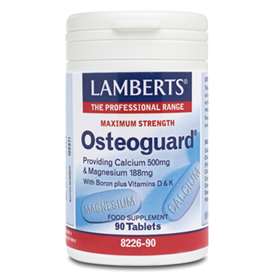
Lamberts Osteoguard is a supplement for maintaining healthy bones, providing calcium and magnesium in a 2:1 ratio, along with boron and the vitamins D and K. A perfect partner for Lamberts Osteoguard Synergy. More >>>
|
|
Price: £4.59 (incl VAT)
(Buy any 3 or more Lamberts products and save 10%)
|
|
|
|
|
| |
 |
| |
|
|
|
Lamberts Osteoguard is a supplement for maintaining healthy bones, providing calcium and magnesium in a 2:1 ratio, along with boron and the vitamins D and K. A perfect partner for Lamberts Osteoguard Synergy. More >>>
|
|
Price: £10.09 (incl VAT)
(Buy any 3 or more Lamberts products and save 10%)
|
|
|
|
|
| |
 |
| |
|
|
|
Designed to optimise calcium absorption but does not contain calcium. A perfect partner for Lamberts Osteoguard. Comes in the form of a 450g powder. More >>>
|
|
Price: £13.23 (incl VAT)
(Buy any 3 or more Lamberts products and save 10%)
|
|
|
|
|
| |
 |
| |
Return to the Keeping Healthy page
Return to the Bones page
Return to the Express Chemist main page
Osteoporosis and Calcium Deficiency FAQs - Buy Online from Express Chemist UK Pharmacy
|
 |
|